Landscaping business insurance in California: what you actually need
Running a landscaping business in California means managing crews, trucks, trailers, and heavy equipment across job sites every day. One employee slip, one damaged irrigation line, or one truck accident on the way to a Fresno property can cost tens of thousands of dollars out of pocket. Landscaping business insurance in California is not optional paperwork. It is the financial foundation that keeps your company operating when something goes wrong, and the right coverage mix is more specific to this trade than most people realize.
Why landscaping businesses face unique insurance risks
Landscaping sits at the intersection of several high-risk categories. You have moving vehicles hauling trailers loaded with mowers, blowers, and edgers. You have workers swinging sharp tools and running power equipment around clients' homes, pipes, and utility lines. In the Central Valley and foothills around Fresno, Clovis, and Sanger, crews often work in extreme summer heat, near dry brush, and on properties where wildfire risk is a real concern.
Insurers treat landscaping companies differently than a typical contractor. The combination of outdoor labor, motorized equipment, and client property exposure puts this trade into a class that needs coverage layers most small-business owners do not think about until after a claim.
The risks that come up most often for California landscaping operations include:
- Third-party bodily injury: a client or passerby struck by a flying rock from a mower or hit by a falling branch during tree work.
- Property damage to client sites: a worker cuts through an underground sprinkler line, cracks a concrete walkway, or backs a truck into a garage door.
- Vehicle accidents: a crew truck rear-ends another driver on Highway 99 while pulling a loaded trailer.
- Employee injuries: a worker twists a knee on uneven ground or suffers heat exhaustion during a summer install in the San Joaquin Valley.
- Equipment theft or damage: mowers, chainsaws, and blowers left on a trailer overnight are frequent theft targets.
Core coverage types every landscaping company needs
General liability insurance
General liability is the foundation. It covers third-party bodily injury and property damage claims that arise during your operations. If your crew damages a client's fence, breaks a window, or a bystander is injured on the job site, general liability responds first. Most commercial clients and property managers in Fresno and across the Central Valley require a certificate of insurance showing at least $1 million per occurrence before they will let you on site. Many require $2 million aggregate.
You can learn more about what this coverage does and does not include on our commercial general liability overview, or visit our general liability service page to explore your options.
Commercial auto insurance
Personal auto policies will not cover your trucks when they are being used for business. California law requires minimum liability limits for commercial vehicles, and if your crew is driving company trucks, those vehicles need commercial auto coverage . This applies to the truck that hauls your equipment trailer, the van your foreman drives to job sites, and any vehicle registered to the business.
For landscaping businesses running multiple vehicles, a fleet policy often makes more sense than insuring each truck separately. Our post on commercial auto insurance requirements in California walks through the state's minimums and what landscaping companies typically carry above that floor. You can also explore fleet insurance for California small businesses if you have two or more company vehicles.
Trailers deserve attention here too. A trailer is not automatically covered under your truck policy. Make sure your agent confirms whether your equipment trailer is scheduled on the commercial auto policy or covered separately.
Workers' compensation
California law requires workers' compensation for any business with even one employee. This is not optional, and the penalties for operating without it are serious. For landscaping companies, this coverage matters even more because the work is physically demanding and outdoor labor in the Central Valley heat carries real injury risk.
Workers' comp covers medical costs and a portion of lost wages when an employee is hurt on the job. It also protects you as the employer from most civil suits filed by injured workers. Rates are based on payroll and the class codes assigned to your workers' duties, so keeping accurate payroll records by job type can reduce your premium at audit time. Our article on workers' comp cost control for California employers has practical tips for managing this expense.
Inland marine insurance for equipment and tools
Your mowers, blowers, chainsaws, hedge trimmers, and other tools move constantly between the shop, your trucks, and job sites. A commercial property policy only covers equipment at a fixed location. Inland marine insurance (sometimes called a tools and equipment policy) follows your gear wherever it goes, covering theft, vandalism, and accidental damage whether the equipment is on a truck, a trailer, or a client's driveway in Clovis.
For a landscaping company, this is one of the most frequently used policies in the stack. Trailer theft in particular is a persistent problem in the Central Valley. Replacing two commercial mowers and a full set of hand tools can easily run $15,000 to $30,000 or more. Inland marine makes that a manageable claim rather than a catastrophic loss.
Commercial umbrella insurance
Underlying liability policies have limits. A serious accident involving a truck and multiple vehicles, or a tree that falls and damages a client's home while your crew is on site, can generate a claim that exceeds your general liability or commercial auto limit. A commercial umbrella policy sits on top of your underlying coverage and picks up where those limits end, typically adding $1 million to $5 million in additional protection for a relatively modest premium.
Many landscaping contractors in California find that clients, HOAs, and commercial property managers are asking for higher limits than they used to. An umbrella is often the most cost-effective way to meet those requirements.
Optional coverages worth considering for landscaping companies
Hired and non-owned auto
If your employees occasionally use their personal vehicles to run job-site errands or haul materials, you have exposure that your commercial auto policy does not cover by default. Hired and non-owned auto coverage fills that gap, extending liability protection to vehicles your business uses but does not own. It is an inexpensive add-on that closes an exposure many landscaping owners do not discover until after a claim is filed.
Business owner's policy (BOP)
A business owner's policy bundles general liability and commercial property coverage into a single policy, usually at a lower combined premium than buying each separately. For landscaping companies with a physical shop, office, or storage facility, a BOP can be a practical starting point. Keep in mind that a BOP's property coverage applies to your fixed location, so you will still want inland marine for equipment on the move.
Surety bonds
Some California landscaping contracts, especially those involving public agencies, schools, or large HOAs, require a surety bond in addition to insurance. A bond is not the same as insurance. It is a financial guarantee that you will complete the contracted work. Our article on surety bonds vs. insurance for contractors explains the difference clearly if you are facing a bonding requirement for the first time.
Professional liability
If your company offers landscape design, irrigation system planning, or consultation services alongside installation and maintenance, professional liability (also called errors and omissions coverage) is worth a conversation. It protects you if a client claims your design advice or system plan caused a financial loss, something that does not fall under standard general liability.
California-specific factors that affect your landscaping insurance
Operating in California adds a few layers that landscaping companies in other states do not face.
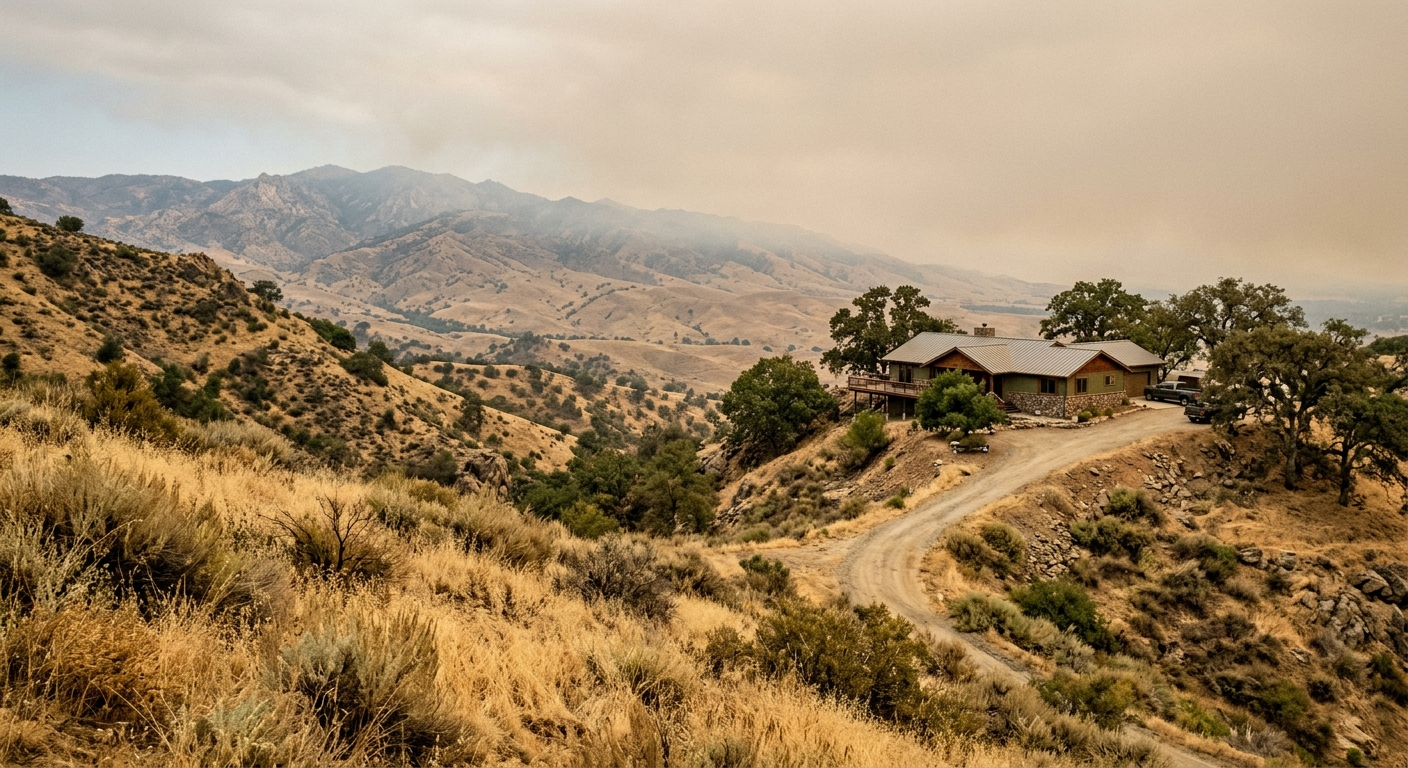
Wildfire and fire risk. If your crews work in foothill communities around Shaver Lake, Friant, or Auberry, clients and insurers pay close attention to dry brush management and equipment use near dry vegetation. A spark from a mower or chainsaw on a dry August afternoon can start a fire. Make sure your general liability policy does not exclude fire damage caused by your operations, and discuss this specifically with your agent if you work in high-fire-severity zones.
Agricultural worker rules. Some landscaping companies in the San Joaquin Valley also do agricultural maintenance or orchard work. California has specific workers' compensation rules for agricultural workers, including different class codes and, in some cases, different audit procedures. If your business crosses into that territory, your agent needs to know.
Independent contractor vs. employee classification. California's AB5 law made it significantly harder to classify workers as independent contractors rather than employees. If you use 1099 workers on your crews, talk to your agent and your attorney about how that affects your workers' compensation requirements. Misclassification is a real risk in this industry, and a workers' comp audit that uncovers it can result in back premiums and penalties.
Contractor licensing. The California Contractors State License Board (CSLB) requires landscaping businesses performing certain work (particularly irrigation and tree services above a certain dollar threshold) to hold a C-27 landscaping contractor license. Maintaining that license may require keeping insurance certificates on file with the CSLB. Your agent can help you make sure your certificates meet the board's current requirements.
How much does landscaping business insurance cost in California?
Cost depends heavily on your payroll, the number and type of vehicles you operate, your equipment value, your annual revenue, and your claims history. Here are realistic ballpark figures for a small to mid-size California landscaping operation:
- General liability: $1,200 to $3,500 per year for a small crew, higher for larger operations or tree-service work.
- Commercial auto: $2,000 to $5,000 per vehicle per year, depending on driver records and the vehicle type.
- Workers' compensation: rates are set per $100 of payroll by class code. Landscaping class codes in California can run $10 to $20 per $100 of payroll, making this often the largest line item for labor-heavy operations.
- Inland marine (tools and equipment): $500 to $2,000 per year, depending on the total value of equipment scheduled.
- Commercial umbrella: $700 to $1,500 per year for a $1 million umbrella over standard underlying limits.
The range is wide because underwriters look at your specific operation carefully. A two-person residential mowing company and a ten-person company doing commercial installs and tree work are priced very differently, even if both call themselves landscaping businesses.
Work with an independent agent who knows California landscaping
McCarty Insurance Agency is an independent agency serving the Fresno area and the surrounding Central Valley, from Clovis and Madera to Sanger and Kingsburg. Because we work with multiple carriers rather than a single company, we can compare policies and pricing across the market to find coverage that fits your operation, not just the nearest available product.
Landscaping insurance is not a one-size-fits-all purchase. The right coverage for a company doing residential lawn maintenance in Fig Garden looks different from a company running tree crews in the foothills or managing commercial properties across Fresno. We take the time to understand what your business actually does before we recommend anything.
If you are ready to review your current coverage or get a fresh quote, contact McCarty Insurance Agency today. You can also reach us directly at (559) 324-1421 . We are here to make sure your crews, your trucks, and your business are protected before the next job starts.