What dwelling fire insurance covers for California landlords
Dwelling fire insurance for California landlords is one of the most practical and frequently misunderstood property policies available. If you own a rental home, a duplex, a small apartment building, or a vacant property, a standard homeowners policy almost certainly will not protect you the way you expect. Dwelling fire policies were built specifically for properties you own but do not live in, and in California's current insurance environment, understanding exactly what you are buying matters more than ever.
A dwelling fire policy covers the structure of the building itself against listed perils. Unlike a homeowners policy, it does not assume you live there, so it omits the personal property and liability coverages bundled into a homeowners form and focuses on what a landlord actually needs: protection for the building, loss of rental income when the property is uninhabitable, and in many cases, basic liability.
The three most common dwelling fire forms are:
- DP-1 (Basic Form) covers only named perils explicitly listed in the policy, typically fire, lightning, and internal explosion. It is the most stripped-down and least expensive option.
- DP-2 (Broad Form) adds named perils such as windstorm, hail, vandalism, and certain water damage scenarios. It is a middle ground for landlords who want broader coverage without paying for an open-perils policy.
- DP-3 (Special Form) is the most comprehensive of the three. It covers the structure on an open-perils basis, meaning all causes of loss are covered unless specifically excluded. Most landlords with newer or higher-value properties choose the DP-3.
Which form is right for you depends on the property's age, value, location, and your tolerance for out-of-pocket risk. A small older rental in Fresno's Tower District may be adequately served by a DP-2, while a newer investment property in Clovis near Harlan Ranch likely warrants a DP-3.
Why a standard homeowners policy will not work for rental property
Many landlords assume their existing homeowners policy covers a property they started renting out. It does not. Homeowners policies are underwritten on the assumption that the named insured lives at the property as their primary residence. The moment you rent it to tenants, you have changed the risk profile of the property in a way that voids or severely limits coverage under most homeowners forms.
California insurers are explicit about this. Renting a home out full-time, or even seasonally, triggers what carriers call a "material change in use." That change can give the insurer grounds to deny a claim or cancel the policy outright. You also lose the personal property coverage, which is appropriate since your tenants' belongings are their own responsibility (that is what renters insurance is for), but more importantly, you lose the income replacement coverage that matters so much when a fire or water event makes the unit unlivable.
The differences between landlord and homeowners insurance in California go beyond just the policy name. The underlying forms, the endorsements available, and the way losses are settled can be significantly different. Knowing which policy type fits your situation protects both your property and your rental income.
California-specific risks every landlord needs to account for
Owning rental property in California means dealing with perils that landlords in other states do not face at the same frequency or severity. Any serious conversation about dwelling fire insurance here has to include these local realities.
Wildfire
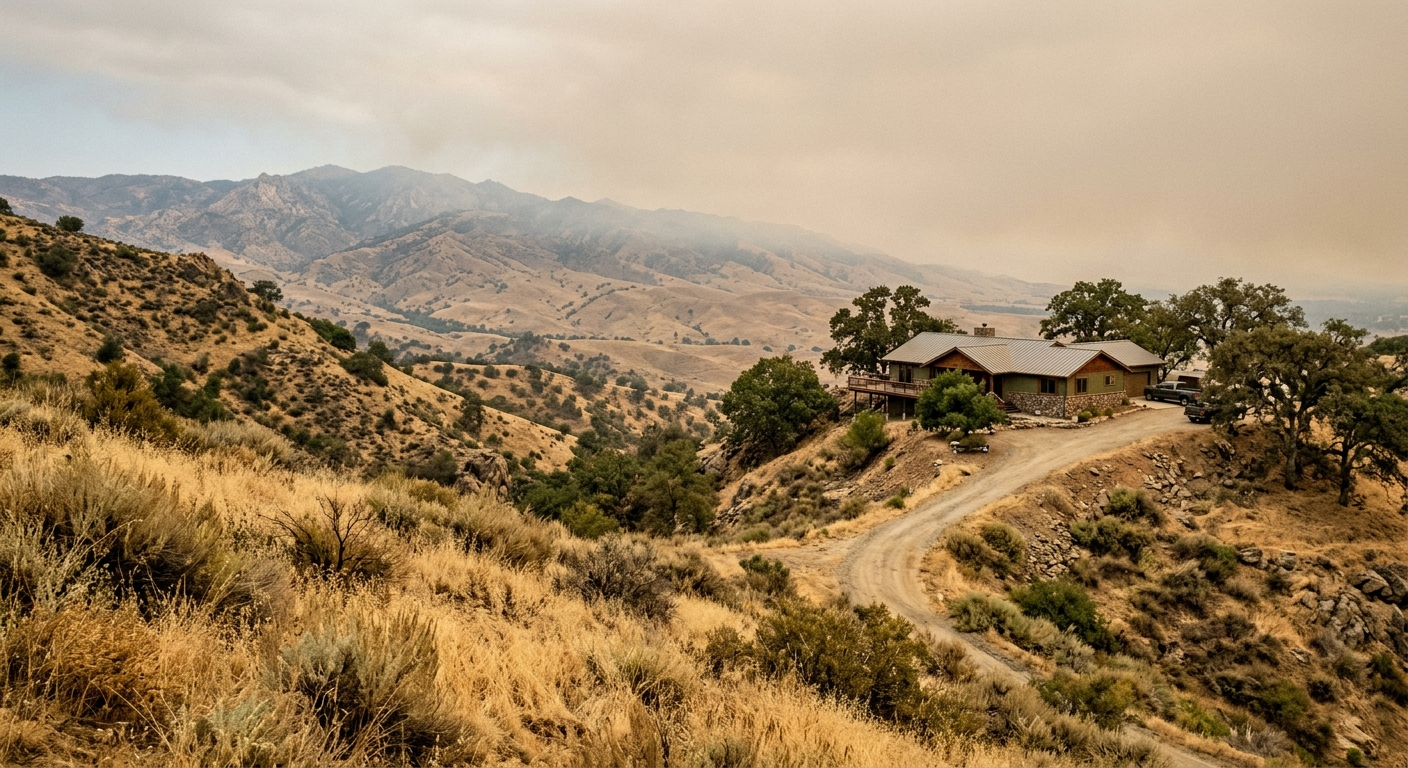
This is the most pressing risk in the state right now. Fresno County, Madera County, and the foothills communities around Shaver Lake, Friant, and Auberry sit in or near areas designated as High or Very High Fire Hazard Severity Zones by CalFire. Even urban Fresno and Clovis neighborhoods have seen coverage disruptions as carriers reassess wildfire exposure statewide.
Wildfire is generally covered under DP-2 and DP-3 policies, but if a carrier has non-renewed your policy or declined to write your property, you may have ended up in the California FAIR Plan, the state's insurer of last resort. The FAIR Plan provides basic fire coverage, but it is a named-perils policy with no liability and no loss-of-rents coverage. You almost always need a companion policy to fill those gaps. The California wildfire insurance landscape has shifted dramatically in recent years, and landlords need to be proactive rather than reactive.
Earthquake
Standard dwelling fire policies exclude earthquake damage. This is not a gray area. If a quake damages your rental property, your DP-3 will not respond. Separate earthquake coverage is available through the California Earthquake Authority (CEA) for qualifying residential properties, or through private carriers for larger buildings. Given California's seismic activity, skipping earthquake insurance is a serious gamble for any property owner. Earthquake insurance should be part of the conversation whenever you are setting up a landlord coverage package.
Flood
Dwelling fire policies also exclude flood damage. Properties near the Kings River, the San Joaquin River, or low-lying areas around Fresno and Mendota may have real flood exposure that a landlord policy will not cover. Flood insurance through the National Flood Insurance Program (NFIP) or private flood markets must be secured separately. See our guide on flood insurance in Fresno for more on this.
Vandalism and vacancy
In the Central Valley rental market, vacancies happen. When a unit sits empty between tenants, vandalism risk increases, and most dwelling fire policies have a vacancy clause that suspends or limits certain coverages after 30 to 60 consecutive days of vacancy. If your property is vacant, ask specifically about vacancy endorsements or consider a vacant property policy to maintain continuous protection.
Coverage components to look for in a dwelling fire policy
Not all dwelling fire policies are assembled the same way. When you are shopping coverage for a California rental, pay close attention to these components:
- Dwelling coverage (Coverage A) is the foundational limit that covers the structure. It should be set at the full replacement cost of the building, not the market value. Replacement cost and market value are rarely the same number, and in today's construction environment they can differ dramatically.
- Other structures (Coverage B) covers detached garages, fences, sheds, and similar structures on the property. It is typically 10% of the dwelling limit, but can be adjusted.
- Fair rental value / loss of rents (Coverage D) is especially important for landlords. If a covered loss makes the unit uninhabitable, this coverage reimburses you for the rental income you lose while repairs are underway. DP-1 policies sometimes omit this unless added, so confirm your policy includes it.
- Liability : some dwelling fire policies include personal liability coverage for landlords; others do not. If yours does not, you need a separate landlord liability policy or a personal umbrella to protect yourself if a tenant or visitor is injured on the property.
- Replacement cost vs. actual cash value (ACV) : DP-1 policies typically settle losses at actual cash value, which accounts for depreciation. A roof that cost $20,000 new but is 15 years old might be settled at $8,000 or $9,000 under ACV. DP-3 policies are more likely to offer replacement cost settlement. For most landlords, the additional premium for replacement cost coverage is worth it.
- Extended replacement cost : material and labor costs in the Central Valley have climbed sharply. An extended replacement cost endorsement adds a buffer (typically 25% to 50% above the stated limit) if actual rebuild costs exceed your dwelling limit. This is a worthwhile add-on when property values and construction costs are both elevated.
How dwelling fire insurance pricing works in California
Pricing a dwelling fire policy in California involves more variables than most landlords expect. Insurers weigh the following when calculating your premium:
- Location and fire hazard zone: proximity to wildland-urban interface areas, CAL FIRE designation, and local fire department response times all affect pricing and eligibility.
- Property age and construction: older homes with original knob-and-tube wiring or outdated plumbing carry higher risk. Updating these systems before applying for coverage can meaningfully lower your premium.
- Roof age and material: a 25-year-old composition shingle roof is a much greater risk than a recently installed Class A fire-rated tile roof. Some carriers will not write a property with a roof over 20 years old without an inspection or a higher deductible.
- Coverage form and limits: a DP-3 with replacement cost settlement and an extended replacement cost endorsement will cost more than a basic DP-1, but the gap in protection during a serious loss is substantial.
- Number of units: single-family rentals, duplexes, and small multi-family properties are priced differently. Properties with four or more units often move into commercial property territory rather than personal lines dwelling fire.
- Loss history: prior claims on the property or in your own insurance history can increase premiums or limit carrier options.
California's homeowners and landlord insurance market has contracted significantly over the past several years. Several major carriers have pulled back or paused new business in parts of the state. This makes working with an independent agent who has access to multiple carriers genuinely useful. An agent who represents only one company can offer only one solution. The difference between independent and captive agents is real, and it matters when your options are limited.
Landlord liability: the coverage most property owners underestimate
The physical structure is only part of what you stand to lose as a landlord. Liability exposure is the other major risk. If a tenant trips on a broken step, a visitor is hurt on the property, or a problem with your unit damages a neighbor's property, you can face a lawsuit that easily exceeds the limits of a basic dwelling fire policy.
Landlord liability typically starts at $100,000 or $300,000 per occurrence. For most single-family rentals, $300,000 is a reasonable starting point, but landlords with multiple properties or higher-value assets should seriously consider a personal umbrella policy, which layers an additional $1 million or more of liability protection above your underlying limits. Umbrella policies are relatively inexpensive for the coverage they provide, and they can be the difference between a manageable loss and a financial disaster.
California courts hold landlords to clear expectations around property maintenance and habitability. The implied warranty of habitability under California Civil Code Section 1941 means you have a legal obligation to maintain the property in livable condition. Failure to do so creates liability exposure that no amount of dwelling coverage will fix.
Get the right coverage for your rental property in Fresno and the Central Valley
Owning rental property in the Fresno area, whether it is a single-family home in Clovis, a duplex in Sanger, a vacation cabin near Shaver Lake, or a small apartment in the Tower District, means your insurance needs are different from those of an owner-occupant. A dwelling fire policy built for your specific property protects your investment, your rental income, and your liability exposure in ways a standard homeowners policy cannot.
McCarty Insurance Agency is an independent agency serving landlords and property owners throughout the Central Valley. Because we work with multiple carriers rather than just one, we can compare options across the market and find coverage that fits your property's actual risk profile, not just a generic template. If you have questions about your current rental property coverage, or you are setting up a new investment property for the first time, we are here to help.
Call us at (559) 324-1421 or reach out through our contact page to start a conversation. We will make sure your rental property is covered the right way before you need to find out it was not.