What mobile home insurance in California actually covers
If you own a manufactured or mobile home in California, you need a policy built specifically for that type of dwelling. Standard homeowners insurance does not cover mobile homes, and the gap can be significant. Mobile home insurance in California is a specialized product that protects your home's structure, your belongings, and your liability in ways a traditional HO-3 policy cannot. Whether your home sits on a rented lot in Fresno, a private parcel in Madera, or a rural community near Shaver Lake, here is what a mobile home policy covers and what you should expect to pay.
The difference between mobile homes and manufactured homes
The terms "mobile home" and "manufactured home" are often used interchangeably, but there is a legal distinction worth knowing. Under federal law, homes built before June 15, 1976 are classified as mobile homes . Homes built after that date must meet the HUD Manufactured Home Construction and Safety Standards and are technically called manufactured homes . California also regulates these structures through the Department of Housing and Community Development (HCD).
For insurance purposes, insurers treat both categories similarly, but they may ask for the year your home was built, whether it is on a permanent foundation, and whether it has been retitled as real property. A home on a permanent foundation with an HCD insignia often qualifies for broader coverage options and sometimes better rates.
Core coverage in a mobile home insurance policy
A standard mobile home policy in California is structured similarly to a homeowners policy but tailored to the risks and construction of manufactured housing. Here is what the main coverage sections typically include.
Dwelling coverage
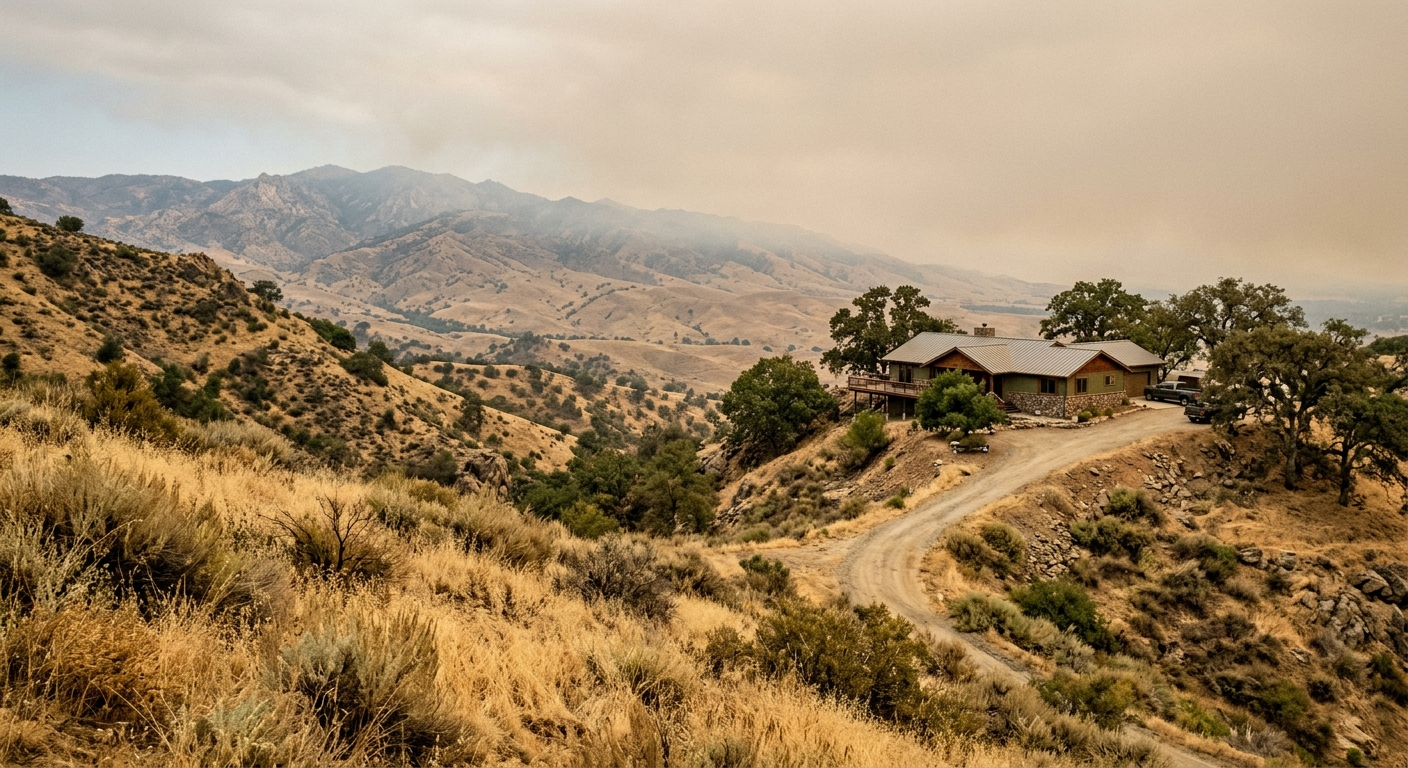
Dwelling coverage pays to repair or rebuild the physical structure of your home if it is damaged by a covered peril. Covered perils commonly include fire, windstorm, hail, lightning, explosion, vandalism, and the weight of snow or ice. In California, wildfire is one of the most pressing risks, particularly in foothill communities like Auberry and Friant, so confirm that fire is explicitly covered and understand any wildfire-related exclusions or surcharges before you bind a policy.
One thing to watch: some policies pay actual cash value (ACV) for the structure, meaning depreciation is subtracted from your claim payment. Others offer replacement cost value (RCV) , which pays what it actually costs to rebuild without a depreciation deduction. RCV coverage costs more but closes a serious gap, especially for older homes that have depreciated significantly on paper.
Personal property coverage
This section covers the contents inside your home: furniture, appliances, clothing, electronics, and similar items. Like dwelling coverage, personal property can be written on an ACV or RCV basis. A 10-year-old couch has a very different ACV versus replacement cost, so the distinction matters in a total-loss situation.
Standard policies often include sub-limits for high-value items like jewelry, firearms, and collectibles. If you have items worth more than those sub-limits, ask about scheduling them separately or adding a floater.
Liability coverage
Liability coverage protects you if someone is injured on your property or if you accidentally cause damage to someone else's property. A guest slips on your steps, your dog bites a neighbor, a tree on your lot falls on an adjacent home: all of these scenarios can trigger a liability claim. Most policies offer $100,000 to $300,000 in liability coverage, but higher limits are usually available. If you own significant assets, a personal umbrella policy layered on top adds an extra buffer that is usually very affordable.
Additional living expenses (ALE)
Additional living expenses coverage , sometimes called loss of use, pays for a hotel, rental home, or other temporary housing costs while your home is being repaired after a covered loss. Given how long contractors are backed up in California right now, this coverage matters more than it used to. Check your policy's ALE limit and the time cap carefully.
Other structures
If you have a carport, storage shed, or fence on your property, other structures coverage extends protection to those as well. The limit is usually a percentage of your dwelling coverage amount, commonly 10%.
What is typically not covered
Understanding exclusions is just as important as knowing what is covered. Several perils are commonly excluded from California mobile home policies:
- Earthquake , California sits on active fault lines, and earthquake damage is excluded from virtually every standard property policy. Separate earthquake coverage is available and worth a serious conversation, especially in the Central Valley where ground motion can be significant. You can learn more on our earthquake insurance page.
- Flood , Water that rises from the ground, including river overflow and storm surge, is not covered under a standard mobile home policy. Parts of the San Joaquin Valley and low-lying communities near the Kings and San Joaquin rivers have seen flooding in recent years, so this is not a theoretical risk. A personal flood policy through the NFIP or a private flood carrier can fill this gap.
- Normal wear and tear , Insurance is not a maintenance contract. Rust, rot, settling, and gradual deterioration are excluded regardless of the damage they cause.
- Mold and pest damage , Mold resulting from a non-covered event, termite damage, and rodent damage are generally excluded.
- Sewer or drain backup , This is sometimes available as an endorsement, so ask specifically if you are concerned about it.
How much does mobile home insurance cost in California?
Rates vary widely based on several factors. In California, most mobile home policyholders pay somewhere between $700 and $1,800 per year for a basic policy with adequate coverage limits. Homes in wildfire-prone ZIP codes, older pre-HUD homes, or policies with higher dwelling coverage limits will land toward the higher end of that range. Homes in lower-risk urban or suburban areas with updated roofs and electrical systems often come in under $1,000 annually.
The factors that influence your specific premium most include:
- Year built , Pre-1976 mobile homes are harder to insure and typically cost more to cover.
- Location and ZIP code , Wildfire risk tier, crime rates, and proximity to fire stations all play a role. The California Department of Insurance has pushed for more transparency in how insurers use wildfire scores, but rating factors vary significantly by carrier.
- Coverage limits and deductibles , Higher limits cost more; higher deductibles lower your premium. A common approach is to carry a higher deductible on the dwelling and apply that savings toward a better liability limit.
- Foundation type , A home on a permanent foundation is generally seen as a better risk than one on blocks or a tie-down system.
- Claims history , Your own claims record and sometimes neighborhood-level claims data affect pricing.
- Credit score , California allows limited use of credit in insurance rating for personal lines. The rules have tightened in recent years, but it can still be a factor.
Special considerations for California mobile home owners
Lot rent and park rules
Many mobile homeowners in the Fresno area and throughout the Central Valley rent the lot their home sits on inside a manufactured home community. Park management often requires proof of insurance with specific minimum liability limits as a condition of the lease. Before you shop for coverage, pull out your park rental agreement and check what coverage minimums are required. Some parks require $100,000 in liability; others ask for $300,000.
Wildfire exposure in the Central Valley and foothills
California's insurance market has been under stress, particularly since the 2017 and 2018 fire seasons. Carriers have reduced their exposure in high-risk ZIP codes, and manufactured home communities in foothill areas have been hit especially hard. If you are having trouble finding coverage on the private market, the California FAIR Plan provides a basic fire policy for properties that cannot be insured elsewhere. The FAIR Plan covers fire, lightning, internal explosion, and windstorm, but it does not provide the full suite of a standard policy. You would need to pair it with a Difference in Conditions (DIC) policy to get liability, theft, and other coverage. This is a more complex setup and usually more expensive, but it is a real option when nothing else is available. Our post on California's homeowners insurance crisis goes deeper on why the market is in this situation.
Titling matters for your coverage options
If your manufactured home has been converted to real property by recording a deed and surrendering the HCD title, some carriers will write it on a standard HO-3 homeowners form instead of a mobile home policy. This can sometimes expand your coverage options and bring your premium in line with traditional homeowners rates. If you are not sure whether your home has been converted, check with the county assessor's office or the California HCD.
What if you rent your mobile home to tenants?
Owner-occupants and landlords have different needs. If you rent your mobile home to a tenant, a standard owner-occupant mobile home policy is not the right fit. You would want a landlord policy designed for non-owner-occupied dwellings. Your tenant, in turn, would need their own renters insurance to cover their belongings and personal liability.
How to get the right policy
Shopping for mobile home insurance in California is not as simple as going to a single carrier's website. The manufactured housing insurance market is more specialized than standard homeowners, and the carriers that write these policies well at competitive rates are not always the ones with the largest advertising budgets. Rate differences between carriers for the same home can run several hundred dollars a year, and coverage terms vary just as much as price.
Working with an independent agent gives you access to multiple carriers at once. Rather than being limited to one company's product, an independent agent can compare options across the market and match your specific home, location, and budget to the carrier that fits best. That is especially useful in California's current environment, where some carriers have pulled back and others have stepped in with competitive products.
Talk to McCarty Insurance Agency about your mobile home coverage
McCarty Insurance Agency is an independent agency serving Fresno, Clovis, Madera, and communities throughout the Central Valley and foothills. Because we work with multiple carriers rather than one, we can shop your mobile home coverage across the market and find a policy that fits your home, your lot situation, and your budget, without pushing you toward a single company's product.
If you are unsure whether your current policy offers replacement cost or actual cash value on your home, whether your wildfire coverage is solid, or whether your liability limits meet your park's lease requirements, those are exactly the kinds of questions we help with every day. Reach out to us at (559) 324-1421 or visit our contact page to get started. We will take a look at what you have and make sure your coverage actually does what you expect it to do when it counts.