What business interruption insurance covers for California small businesses
Business interruption insurance for California small businesses is one of the most misunderstood coverages on the market, and also one of the most important. When a fire, burst pipe, or another covered event forces your doors to close, you still owe rent, payroll, loan payments, and utilities. Business interruption (BI) coverage is what keeps those obligations from wiping out a business that was otherwise healthy before disaster struck.
Most small business owners in Fresno, Clovis, and across the Central Valley carry a commercial property policy and assume they are covered for lost income. They are not, unless business interruption coverage is specifically included or added. This post explains what BI pays, what it does not pay, how California's regulatory environment affects your policy, and what questions to ask before you buy.
The core components of a business interruption policy
A standard business interruption policy has three main pieces that work together to keep your finances stable during a shutdown.
- Lost net income: the revenue your business would have earned during the closure period, minus expenses you no longer have because you are not operating.
- Continuing operating expenses: fixed costs that keep running whether your doors are open or not, including rent, lease payments, loan installments, and salaries for key employees you need to retain.
- Extra expense coverage: reasonable costs you incur to get back to normal faster, such as renting a temporary space, expediting equipment delivery, or paying overtime to restore operations.
Many policies bundle all three into a single BI limit, while others write extra expense as a separate sublimit. When you are comparing quotes, that structure matters, because a low extra-expense sublimit can leave you short when you actually need it.
What triggers a business interruption claim in California
The most important concept in any BI policy is the trigger . Coverage activates only when a "covered cause of loss" directly causes a physical loss or damage to your property and that damage forces a suspension of your operations. This phrase has produced more disputes between policyholders and insurers than almost anything else in commercial insurance.
Common covered triggers
- Fire: a kitchen fire that destroys a restaurant's hood system and shuts down service for six weeks is a textbook covered loss.
- Windstorm or hail: uncommon in Fresno but relevant in the Sierra foothills, where wind events can damage roofs and facades.
- Water damage from a burst pipe: covered under most "all-risk" or "special form" commercial property policies.
- Vandalism: if vandalism causes enough physical damage to force a closure, most policies respond.
- Smoke damage: wildfire smoke that infiltrates an HVAC system and renders a facility unusable has been litigated in California courts. Outcomes vary depending on how the policy defines "physical loss."
What typically does not trigger coverage
- Flood: flood is almost always excluded. Central Valley businesses near irrigation canals or low-lying areas need a separate commercial flood policy.
- Earthquake: excluded on standard policies. California businesses in seismically active areas should ask about earthquake endorsements separately.
- Pandemic or government-ordered closure without physical damage: COVID-19 litigation in California courts produced mixed rulings, but the vast majority of standard BI policies did not pay pandemic shutdowns. Some insurers now explicitly exclude virus and pandemic language. Read this exclusion carefully.
- Utility outage originating off your premises: a power company failure that shuts you down is not covered unless you specifically add an "off-premises utility" or "service interruption" endorsement.
The waiting period and indemnity period: two numbers that determine your payout
Two time-based policy terms have an outsized effect on how much you actually collect after a claim.
Waiting period (also called the retention period)
Most BI policies include a waiting period of 72 hours. The clock starts when the covered event occurs. If your business reopens within 72 hours, no BI payment is made. Think of it as a deductible expressed in time rather than dollars. Some policies use 48 hours; a few use none at all. For businesses with slim margins, a longer waiting period represents real, unrecoverable loss.
Indemnity period (also called the period of restoration)
This is the maximum window during which the policy will pay. Most standard policies set the indemnity period at 12 months, but you can buy 18 or 24 months of coverage. For a small business in Fresno's Tower District or Old Town Clovis that might take 14 months to rebuild and reopen after a serious fire, a 12-month limit could leave you unprotected for the final two months of closure. Choosing the right period of restoration is one of the most consequential decisions in structuring your BI coverage.
How to calculate the right amount of coverage
Underinsuring your business interruption limit is extremely common, and it is just as damaging as having no coverage at all. Carriers typically ask you to project 12 months of gross earnings or gross profit, depending on the form they use. Those two terms are not interchangeable:
- Gross earnings form: pays the difference between your projected revenue and the costs you saved by not operating (variable expenses). This is more common in older policies.
- Gross profit form: pays your projected net profit plus your continuing fixed expenses. This is the more modern calculation and is typically more favorable to the insured.
To arrive at a reasonable number, pull your profit and loss statement from the past 12 months, project any expected growth, and identify which expenses would continue during a full shutdown (rent, loan payments, salaried staff, insurance premiums). That figure is your baseline BI limit. Add a buffer for inflation and rising construction costs, which have been significant throughout California since 2021. A local independent agent in Fresno can walk you through this calculation and compare how different carriers define gross earnings or gross profit on their forms.
Business interruption inside a BOP versus a standalone policy
Many California small businesses buy a Business Owner's Policy (BOP), which packages general liability, commercial property, and business interruption into a single policy at a lower combined premium than buying each separately. BOPs are a practical starting point for retail shops, professional offices, small restaurants, and similar businesses with under $5 million in annual revenue.
However, BOP business interruption limits are often set conservatively, and the coverage form may be less flexible than a standalone commercial policy. Businesses with complex supply chains, large payrolls, long rebuild timelines, or significant seasonal revenue swings may need a standalone BI policy with higher limits, a longer indemnity period, or specialized endorsements such as:
- Contingent business interruption (CBI): covers income loss when a key supplier or major customer suffers a covered loss that ripples into your operations.
- Civil authority coverage: pays when a government order restricts access to your premises because of damage to a neighboring property, even if your building itself is undamaged.
- Extended period of indemnity: stretches coverage beyond the physical restoration date to account for the time it takes to rebuild your customer base after reopening.
California-specific considerations for small business owners
California has regulatory features that directly affect how commercial insurance is bought and priced.
Proposition 103 and rate filing requirements
California's Proposition 103 requires insurance carriers to file and justify commercial rate changes with the California Department of Insurance before they take effect. This process can slow market responses to loss trends, which is one reason some carriers have reduced their appetite for California commercial business in recent years. Fewer carriers in the market can mean less competitive pricing on BI coverage, particularly for businesses in wildfire-exposed areas of Madera County or the Sierra foothills near Shaver Lake.
Wildfire exposure and smoke damage disputes
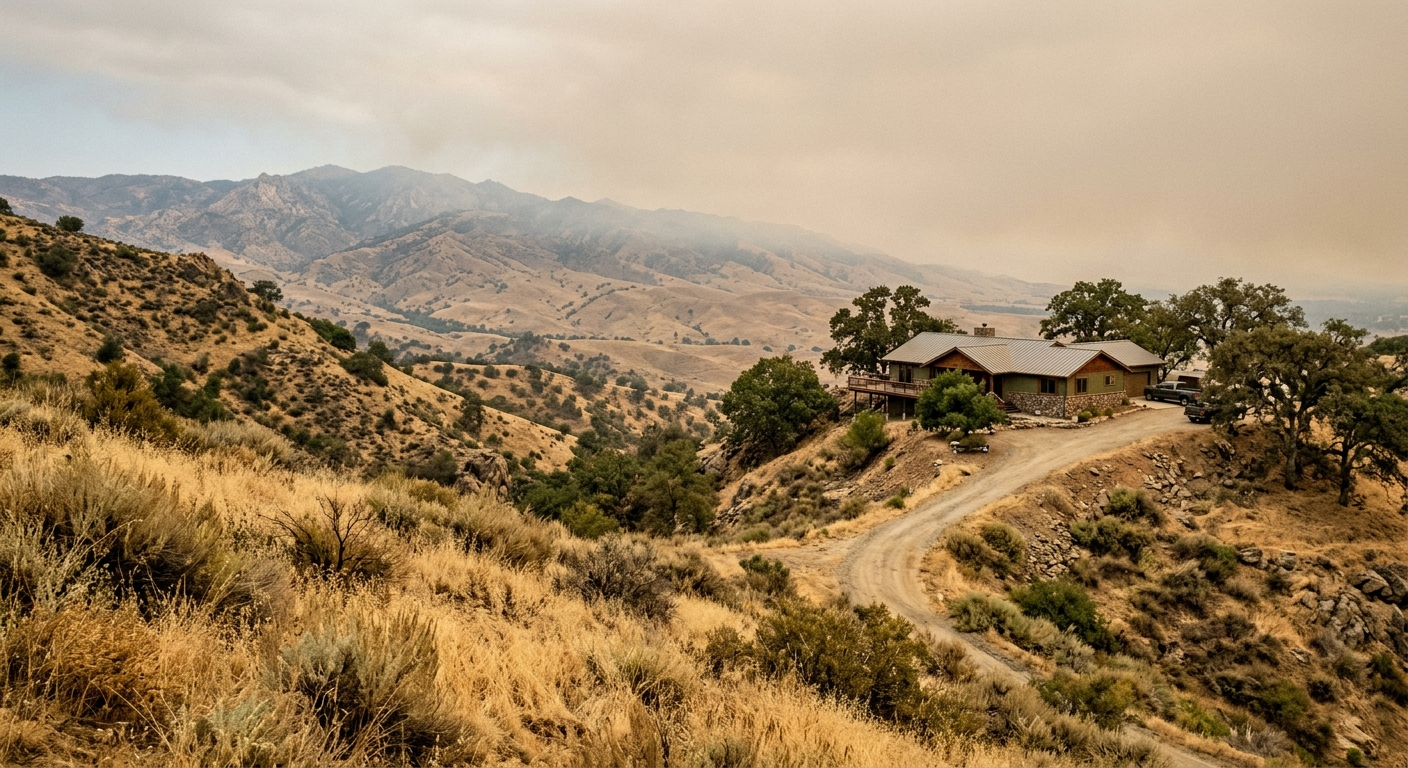
If your business is anywhere near the Sierra Nevada foothills, smoke-related shutdowns are a real risk. Whether smoke infiltration constitutes "physical loss or damage" has produced conflicting rulings in California state and federal courts. Some carriers have added explicit smoke exclusions; others cover it. This is a question to raise when reviewing any policy, and one that independent agents catch far more reliably than online-only quoting platforms.
Workers' compensation interaction
California requires most employers to carry workers' compensation coverage, and payroll obligations continue during a shutdown whether or not you generate revenue. Your BI coverage should be sized to include full payroll for the staff you intend to retain during the closure. This is especially important for businesses with specialized employees who would be hard to replace if laid off, such as skilled tradespeople or licensed professionals. For more on how California workers' comp works, see our post on workers' comp benefits and taxes in California.
Common mistakes California small businesses make with BI coverage
Certain patterns show up repeatedly when coverage falls short for small businesses in the Fresno area.
- Setting the limit based on last year's revenue without adjusting for growth: if your business has grown 20% this year, last year's numbers will leave you underinsured.
- Ignoring the waiting period: a 72-hour waiting period sounds minor until your restaurant is closed for five days and the first three days are not covered.
- Assuming a BOP limit is adequate without checking the number: many BOP forms auto-calculate BI at 25% or 50% of the building limit, which bears no relationship to your actual income.
- Not buying contingent business interruption: businesses that depend on a single major supplier (common in agriculture-related industries throughout the Central Valley) face income risk from events that never touch their own property.
- Skipping the extra expense endorsement: extra expense coverage pays for a temporary location. Without it, your only option during restoration is zero revenue.
How McCarty Insurance Agency can help protect your business income
McCarty Insurance Agency is an independent insurance agency serving small businesses across Fresno, Clovis, Madera, and the broader Central Valley. As an independent agency, we are not tied to any single carrier. We shop your coverage across multiple insurers to find a business interruption policy that fits both your actual income exposure and your budget.
We review your profit and loss statements, walk through the specific triggers and exclusions in each policy form, and explain the difference between a gross earnings and gross profit calculation before you sign anything. If your business has wildfire exposure, supply chain dependencies, or a long expected rebuild timeline, those factors shape which carrier and which form we recommend. Our goal is that you never face a covered loss only to find out your BI limit was too low or your policy had an exclusion nobody told you about.
To talk through your business interruption coverage options, call us at (559) 324-1421 or reach out through our contact page to schedule a review. You can also explore our full business interruption insurance options to see what we offer and start building a policy that actually protects your income when you need it most.