Inland marine insurance: what it covers and why California businesses need it
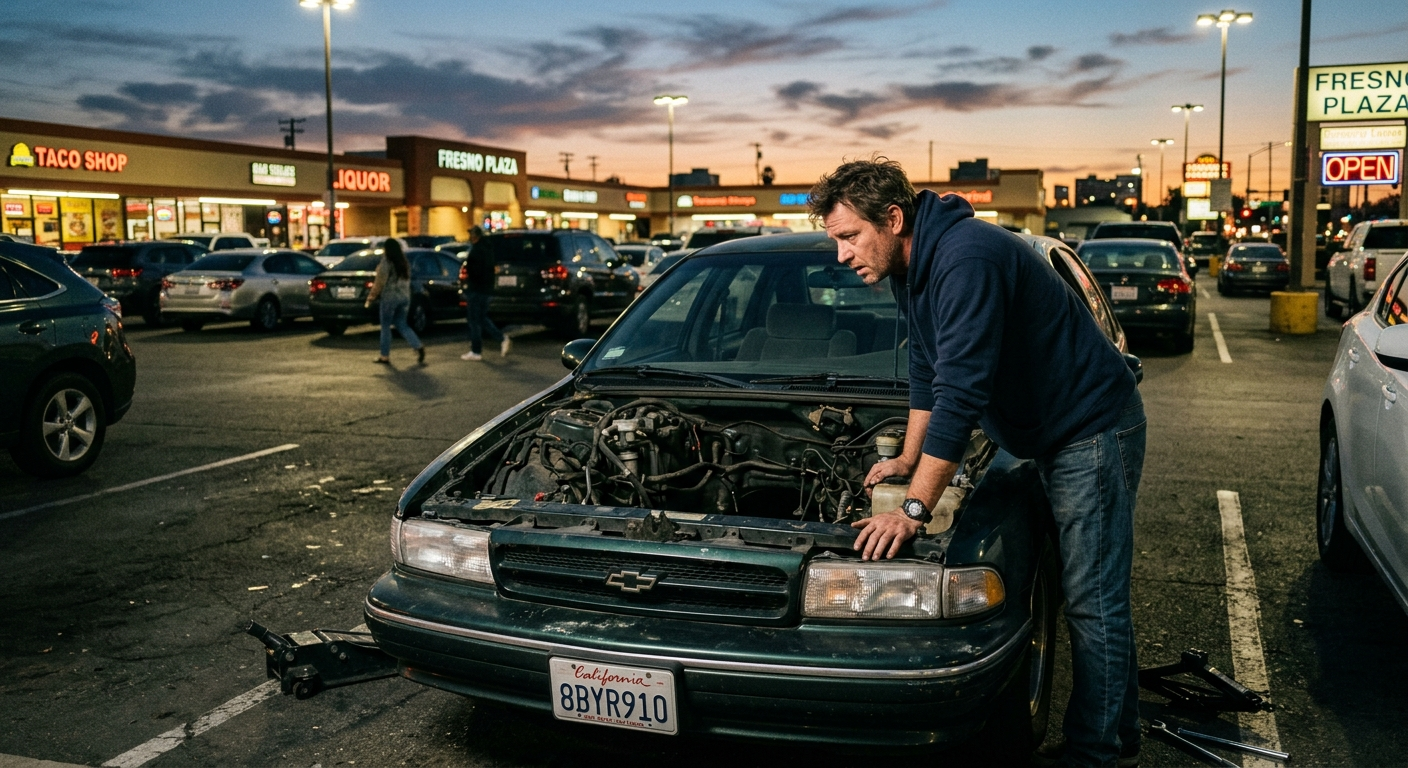
If your business owns tools, equipment, or inventory that moves around, a standard commercial property policy almost certainly leaves you exposed. Inland marine insurance is the coverage designed for property in transit, property stored off-site, and specialized equipment that does not stay in one place. For California businesses, from Fresno-area contractors hauling tools to the job site to agricultural operations moving equipment between fields, this coverage fills a gap that surprises many owners when a claim gets denied.
Why "inland marine" has such a strange name
The name sounds like a contradiction, but the history is straightforward. Marine insurance originally covered cargo crossing oceans. As commerce moved inland, carriers extended coverage to goods traveling by road and rail. The "inland" prefix stuck, and the category grew to include almost any movable or specialized property. Today it has nothing to do with water. It is simply the coverage form that handles property that moves, carries high value, or does not fit neatly inside a building's four walls.
That origin explains the coverage logic: inland marine follows the property, not the location.
What inland marine insurance actually covers
Coverage varies by policy form, but most inland marine policies fall into a few clear categories.
Contractors equipment and tools
This is the most common use case for small and mid-size businesses in the Central Valley. A landscaping company's riding mowers, a plumbing contractor's pipe equipment, a general contractor's power tools: all of these can be covered under a contractors equipment floater while on a job site, in a truck, or temporarily stored in a yard. Standard commercial property policies cover items inside your building. Once equipment leaves the premises, that protection often disappears.
Installation floaters
If you purchase materials that will be installed at a customer's property, an installation floater covers those materials from the moment they leave your warehouse until the job is complete and accepted. A plumbing supply house delivering $40,000 in copper pipe to a new-construction site, for example, would want this protection in place before the materials leave the truck.
Transit and cargo coverage
Businesses that ship or receive goods regularly face real exposure every time a delivery is in motion. Inland marine cargo coverage protects merchandise, raw materials, and finished goods while they are being transported, whether you own the truck or a third-party carrier does. This matters especially in California, where long highway runs between distribution hubs and retail locations are common.
Scheduled equipment and high-value items
Some businesses own specialized equipment that is expensive, hard to replace, and not kept at a fixed premises. Medical diagnostic equipment, survey instruments, broadcast cameras, and music production gear are good examples. An inland marine policy can schedule these items individually and cover them at full agreed value, which avoids depreciation disputes at claim time.
Bailee coverage
If your business takes temporary custody of customers' property, bailee coverage protects you when that property is damaged or lost while in your care. Dry cleaners, repair shops, storage facilities, and auto detailers all carry bailee exposure. If a customer's coat is destroyed in a fire at your laundry facility, your commercial property policy covers your building and your equipment. Bailee coverage is what pays the customer for the coat.
Fine art and collectibles
Galleries, auction houses, and businesses displaying valuable artwork need coverage that matches the actual market value of the pieces and follows them to shows, transit, and temporary exhibitions. Standard property forms cap coverage at low sub-limits and apply depreciation that does not work for art.
What inland marine does not cover
Knowing the exclusions is just as important as knowing what is covered. Most inland marine policies exclude:
- Wear and tear. Gradual deterioration or mechanical breakdown is not a covered loss event.
- Employee dishonesty. Theft by your own employees is a separate coverage need, typically addressed by a commercial crime policy.
- Flood damage. California businesses near rivers or low-lying agricultural areas should look at separate commercial flood coverage for this exposure.
- Auto accidents involving your vehicles. Damage to the vehicles themselves is covered by commercial auto, not inland marine. The cargo inside the vehicle may be covered, but the vehicle is not.
- Mysterious disappearance without evidence of theft. Some policies exclude losses where there is no clear evidence of what happened. Read the policy language carefully.
How California's business environment creates inland marine exposure
California's economy is large and diverse, and the Central Valley in particular drives significant commercial activity that creates inland marine risk every day.
Agriculture and farm equipment
Fresno County consistently ranks among the top agricultural counties in the United States by value of output. Farm equipment that moves between properties, irrigation systems being transported, and harvesting equipment in transit between seasonal operations all represent real inland marine exposure. A standard farm policy may not follow equipment off the declared premises.
Construction activity
California's ongoing housing and infrastructure demand means construction crews are active throughout the Fresno metro, Clovis, and surrounding communities. Tools and equipment stolen from job sites represent one of the most common inland marine claims in the state. California contractors should verify that their builders risk coverage and their inland marine policy work together without gaps or overlapping premiums.
Solar and energy equipment
California's renewable energy requirements have driven a significant increase in solar installation. Panels being transported to a residential job in Clovis or a commercial project in Madera are valuable, fragile, and not covered under most standard property forms while in transit.
Technology and film production
The Central Valley sees considerable commercial photography, videography, and media production work. Camera bodies, lenses, drones, and production rigs can represent tens of thousands of dollars in equipment that travels constantly. Inland marine is the standard solution for this class of property.
How inland marine interacts with your other commercial policies
Inland marine does not replace your other business policies. It works alongside them to close gaps. Here is how the pieces typically fit together:
- Commercial property policy. Covers buildings and contents at a fixed location. See our overview of what commercial property insurance covers for a full breakdown.
- General liability. Covers third-party bodily injury and property damage you cause. It does not cover your own equipment.
- Commercial auto. Covers your vehicles and, sometimes, liability for cargo damage, but not the cargo or equipment itself.
- Inland marine. Fills the space between those policies by covering your movable property wherever it goes.
Some businesses find that a Business Owners Policy (BOP) bundles property and liability together at a reasonable price but still leaves out inland marine coverage for equipment that leaves the premises. If you rely on a BOP, ask your agent specifically whether off-premises equipment is covered and at what limit.
What affects the cost of inland marine coverage in California
Premiums depend on several factors:
- Type of property. Tools and equipment are rated differently from fine art or electronic instruments. Higher theft rates in a category mean higher premiums.
- Total insured value. Coverage is typically priced per $100 of insured value, so a business with $500,000 in scheduled equipment pays more than one with $50,000.
- Security practices. Locking equipment in a trailer, using GPS tracking, and keeping equipment in secured storage overnight can reduce premiums.
- Claims history. Prior theft or damage claims will affect pricing, just as they do with other commercial lines.
- Territory. Equipment regularly transported through higher-crime corridors or to urban job sites may carry higher rates than equipment that stays within a rural service area.
As a rough benchmark, many small contractors in California pay between $500 and $2,500 per year for a basic contractors equipment floater covering $50,000 to $150,000 in tools and equipment. Larger schedules or more specialized property cost more. An independent agent can run quotes across multiple carriers to find the best fit for your specific situation.
Common mistakes businesses make with inland marine coverage
A few patterns come up repeatedly when business owners file inland marine claims and find they are not covered:
- Assuming commercial property covers everything. This is the most common mistake. If a policy says coverage applies at the "described premises," equipment taken off-site typically is not covered.
- Undervaluing equipment. Insuring tools at original purchase price rather than replacement cost means a claim settlement that does not actually replace what was lost.
- Not updating the schedule. Businesses buy new equipment and forget to add it to the inland marine schedule. Coverage does not apply to unscheduled items unless the policy has a blanket provision.
- Relying on a general liability policy for cargo damage. GL covers third-party claims, not your own property. If your truck is broken into and $20,000 in tools are stolen, GL pays nothing for the tools.
Get the right inland marine coverage for your California business
McCarty Insurance Agency is an independent agency serving businesses throughout Fresno, Clovis, and the broader Central Valley. Because we work with multiple carriers rather than a single company, we can compare inland marine options side by side and find coverage that matches how your business actually operates, not a generic policy that leaves gaps.
Whether you are a contractor running crews across several job sites, a retailer shipping inventory, or a specialty trade with expensive equipment on the move, we can build a policy package that works. Our team knows the local business environment and the specific risks that California operations face, from agricultural equipment transit to solar installation work to construction in expanding communities like Clovis and Madera.
Call us at (559) 324-1421 or reach out through our contact page to get a conversation started. We will review what you already have, identify the gaps, and put together options that make sense for your budget and your risk.